20 Good Ways For Picking Termite Control Services In Jakarta
Wiki Article
Jakarta Homes: Subterranean Termite Defense
Walk through any Jakarta neighborhood--Menteng, Kebayoran Baru, Kelapa Gading--and you will see them: door frames swollen at the base, fine brown lines climbing foundation walls, tiny pinprick holes in skirting boards. A majority of homeowners believe that it is just normal wear and wear and tear. It's not true. It's a sign a subterranean ant colony is present inside the structure and feeding constantly, 24 hours per day all week long. They are fed by Jakarta’s constant humidity, as well as by the unintentionally inviting modern construction techniques. To safeguard a Jakarta house, you must remove all imported pest control methods and use strategies that are specific to Jakarta's habitat, soil, and climate.
1. The Door Frame and Window Virus
Jakarta termites can't burst concrete slabs. They enter at the point where the wood meets the masonry, which is usually within range of human beings. Door jambs, window sills and the wooden frames that are incorporated into brick walls account for around half of all documented attacks. Anti-termite solutions which arrive with injection rods and drills directed at the floor slab are fighting a war that is not theirs. The real battle is fought at waist level, where water accumulates on glass and then is absorbed by untreated wooden.
2. Four Species, One City, Different Rules
Jakarta has at minimum four distinct subterranean termite species and they don't behave in a similar way. Coptotermes Gestroi is a ferocious structural invader. Microtermes insperatus is numerically dominant but less destructive. Macrotermes gilvus builds visible mounds in gardens. Coptotermes curvignathus likes live trees, but can migrate into houses when wood runs out. Pest control professionals who are unable to distinguish these species are not able to select the appropriate bait.
3. The Six-Week Truth
It is impossible to completely eliminate the colony within a day. It takes between six and eight weeks for chlorfluazuron move through colonies by trophallaxis, the mouth-to-mouth food sharing which defines the termite's social life. Pest control firms that advertise 24-hour eradication use contact poisons to kill only the foragers. The reproductive nucleus is left untouched.
4. Above-Ground stations transform everything
Perimeter bait stations are helpful for monitoring but ineffective against a thriving infestation within the structure. Above-ground stations are small bait cartridges secured to mud tubes force toxicants into the colony’s active highway. Jakarta exterminators without above-ground stations sell inspections, not treatment.
5. The Soil Moisture Trap
Jakarta's silty-clay soils retain moisture. Termites favor soils with high levels of moisture, which are above 22 percent. Injecting chemical compounds into a habitat for termites without taking a look at the drainage system, downspouts or irrigation sprays can be an expensive error.
6. Pine Stake Forensics
Before they recommend treatment for the pest, exterminators suggest that untreated Pinusmerkusii stakes are buried all around the perimeter. After 30 days, they dig them up and weigh them. Weight loss exceeding thirty percent confirms high foraging pressure and warrants intervention. This is not an assumption, but rather a calibrated entomology that is accessible to any professional.
7. Green Belt Hazard
Nine Jakarta sub-districts carry extreme termite risk: Penjaringan, Pademangan, Palmerah, Kebayoran Baru, Jagakarsa, Pesanggrahan, Kramatjati, Duren Sawit, and Cipayung. These areas share one characteristic--significant remaining green space that sustains parent colonies. The homes in these zones need regular inspections at intervals of quarterly and ongoing baiting. Annual contracts won't be sufficient.
8. New Construction Isn't Safe
Termites adapt urban development. They nest in the fill soil imported for the construction of new housing estates. They forage through the utility trenches and invade the irrigated landscaping installed by developers. A newly built home in BSD or Bekasi is not a blank slate but an open-air termite habitat which opened for business when the first tree was planted.
9. Short-Rotation Teak isn't Your Grandfather's Teak
The traditional Javanese teak, which is harvested at the age of 60, has silica and oils that keep termites away. Modern teak harvested from plantations that is just 15 years old does. A lot of "teaks" that are used in Jakarta's current housing, are chemically immature and botanically identical. The termites often draw to the timber of homeowners who pay high costs for wood resistant to termites.
10. The Mud Tube Forensics Rule
Do not scrape a tubing of mud without first looking into what it has revealed. The tube's beginning point is the soil entry zone. Its diameter is correlated with the age of the colony. The place where your colony is (bathrooms and kitchens, or even the exterior walls) may indicate the moisture source that sustains it. It's like the deletion of security footage prior to viewing it, if you take out the tube without understanding the directions.
Conclusion
The houses of Jakarta aren't being targeted by an invasion force. The houses are inhabited by people who have adjusted themselves to the specific conditions of this city. The species has been recognized. Maps are designed to illustrate the patterns of attack. Treatment time frames can be analyzed. The only thing to be determined is whether homeowners or the companies they hire for treatment of anti-termite will break with their pesticide mythology and adopt those procedures that Jakarta's subterranean termites have required scientists to verify. The science is already there. You have to decide if you want to use it. Have a look at the best jasa basmi rayap for more tips including cara membasmi rayap di lemari, anti rayap terbaik, rayap rumah, jasa pengendalian hama, rayap kayu, cara membasmi rayap kayu, jasa anti rayap, jasa anti rayap, rumah rayap, jasa pest control and more.
Baiting Above-Ground For Asian Subterraneans At Jakarta
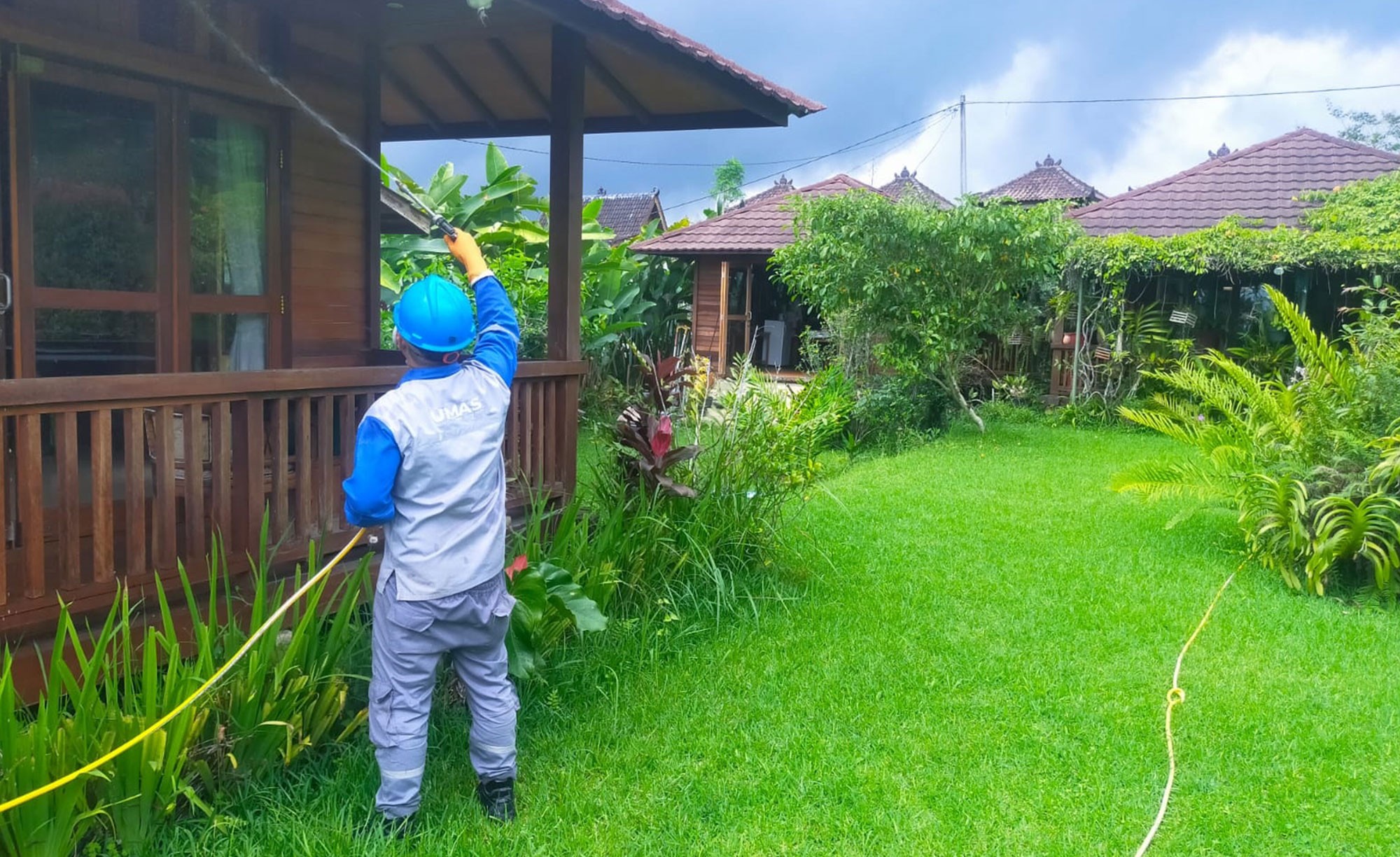
Jakarta homeowners believe that poisoning termites involves burying plastic bait stations in the garden. A technician checks them once every couple of months, and then looks at them and shrugs, then moves forward. This is a form of perimeter monitoring, not elimination of colonies. Baiting above ground is a completely different field of study. The station isn't buried however, it is instead secured onto an active mud-tube or pressed into the excavated damage. The bait is not concealed as it is directly inserted into the termites' commute route. For Asian subterranean species--Coptotermes gestroi, Coptotermes curvignathus, Microtermes insperatus--above-ground delivery bypasses every behavioral barrier that makes perimeter baiting slow and uncertain. Jakarta termite control services are specifically designed for inspection.
1. Active Infestation is Required for Above-Ground Stations
Perimeter baiting works on speculation. The stations are set up and technicians wait for termites to discover them. Above-ground baiting works on confirmation. The station can only be deployed once mud tubes or damaged wood have been found. This isn't a restriction but rather an improvement in effectiveness. No plastic is buried in sterile soil. There is no requirement for technicians to oversee stations that don't fall victim to a slash.
2. The Mud Tube is now a delivery infrastructure
Stations are built for above-ground use, to blend into existing structures. The station base forms a sealed chamber above the mud tube. Termites that pass between nest and feeding area pass through the station. They then come into contact with the bait matrix, eat it and continue on their journey. The tube is not damaged. The commuter patterns aren't disturbed. The colony poisons itself using its infrastructure.
3. For Deliveries Above Ground, the Test for Palatability Is Different
The colony is already familiar with the taste of wood that has been destroyed. The site of feeding has been verified. The bait matrices above the ground need only to be acceptable. This permits the addition of poisons with slow-moving action, which could not be permitted if they were competing with untreated wood. Jakarta exterminators are required to carry several kinds of baits that they can choose according to the feeding preferences that is observed at specific locations of infestation.
4. Recruitment Multiplier through Self-Seeding
The termite's immediate food source starts when live termites taken from the infested logs are put in the aboveground station's chamber for recruiting. They are familiar with the local climate and the rhythm of foraging. They start to eat bait and then recruit nestmates through trophallaxis. This simple action increases the delivery of toxicants by around 30 percent. Exterminators eliminate biological assets in the process of killing termites after scraping off damaged wood.
5. Coptotermes gestroi Responds Rapidly Above Ground
Asian subterranean termites, specifically Coptotermes gestroi, keep a high foraging rates all year long. Above-ground bait stations that are located near active infestations generally show eating within 48 hours. The timeframes for removing colonies is decreased from months to a matter of weeks. The services who quote the six-month timeframe for above-ground baiting employ inadequate matrices or are unable to transfer the recruitment termites.
6. The place of Micro- and macro-terms differs
The termites that produce fungal spores (Microtermes Macrotermes, Microtermes, and Macrotermes Gilvus) are not able to construct mud tubes as extensively as Coptotermes. They hunt above the ground in a more dispersed manner, and feeding sites of these termites are usually hidden within wood. To bait above ground it is essential to excavate the damage site and then insert the matrix directly into the feeding holes. Station geometry is different. Jakarta exterminators that attempt Coptotermes protocols for Microtermes infestations will notice a lack of intake.
7. Moisture Conditioning Is Non-Negotiable
Above-ground bait matrixes are made at certain water activity levels. Jakarta's high humidity exchanges water with the environment. Bait in a toolbox of an automobile for a period of time could dehydrate. Bait removed from its sealed packaging, and left at the location to absorb water from the atmosphere, can degrade. Exterminators must condition the bait cartridges just before installation. This means adding the measured amount of water to achieve the ideal moisture level. In the event of a non-useable inventory, it is required to be secured from Jakarta's 24/7 humid climate.
8. Inspection Frequency Compresses
Programs for perimeter baiting are built around inspection cycles of quarterly or semi-annual. Above-ground baiting is done on a weekly cycle. Since active infestations eat bait fast, cartridges depleted within days need to be replaced. The destruction of colonies is confirmed when the feeding stops, and the mud tubes begin drying up. If services include above-ground checks within their normal schedule for monitoring the perimeter they'll notice the bait being diminished, and think that the treatment is proceeding well but miss the opportunity to revive colony.
9. Warranties require different underwriting
Perimeter-based baiting warranties are based on the density of stations and inspection frequency. The cost of above-ground warranties is determined by the species' identification, size of infestation and the structural complexity. One Coptotermes gestrii colony that is at the threshold of a front door is warrantable at the standard rates. A multi-colony Microtermes infestation spread across an entire ground floor requires different risk modeling. Jakarta anti-termite service providers who use the same pricing for warranty for both scenarios are underpricing risk.
10. Above-Ground Diagnostics Are Not just Therapeutic
Information on the health of colonies including foraging area, health, and caste ratio can be gathered by observing the rate of bait consumption and the amount of termites in the stations. Rapid consumption suggests a large colony under stress. Abandonment after consumption indicates colony removal. Intense mud tube darkening indicates less traffic. The termite control specialists who have been trained to detect these signs are able to alter the treatment parameters in a flash. Pesticides who exchange cartridges, then leave the premises do not utilize this information-rich method of treatment for termites.
You will be able to conclude your conclusion by clicking the hyperlink below.
Baiting for Asian Subterraneans above ground is not an option offered by inspection firms. This is the method that separates them from colony elimination specialists. Perimeter baiting monitors. Above-ground baiting provides pleasure Perimeter Baiting is waiting to be discovered. Above-ground baiting engineers face challenges. Perimeter-baiting generates quarterly service ticket. Above-ground baiting results in the elimination of colonies, as well as warranty renewals following verified the effectiveness. Jakarta anti-termite services that delay the use of above ground protocols usually mention the expense of equipment or training requirements for technicians, or the inconvenience of carrying multiple baitmatrices. These are not barriers but rather investments. The cost of the equipment is recouped within the first 3 above-ground deployments. Training can be beneficial for the long-term retention of technicians when they move from generalist applicators to specialists in diagnostics. The multiple bait matrices differentiate premium service providers from commodity exterminators. Homeowners who are infested do not need surveillance around their property. They just want to kill the colonies. Above ground trapping is the easiest way to get there. Jakarta exterminators scrape the tubes or inject soil, however they don't set up above-ground baiting stations. The colony will continue feeding throughout the day while the exterminator is working. See the recommended anti rayap jakarta for website advice including jasa anti rayap jakarta, jasa pengendalian hama, jasa basmi hama, jasa anti rayap surabaya, rayap rumah, cara membasmi rayap di lemari kayu, jasa basmi hama, jasa rayap, pembasmi hama, cara membasmi rayap kayu and more.
